
Palm wine is often served at weddings, family gatherings and community celebrations across Nigeria. But its place in these settings goes beyond refreshment. In many communities, the drink represents hospitality, respect, family relationships and cultural continuity. It can mark an agreement, welcome a visitor or form part of a ceremony connecting the living with their ancestors.
Although its preparation and cultural uses vary from one ethnic group to another, palm wine remains one of the traditional drinks with a recognisable place in social life across parts of southern and central Nigeria.
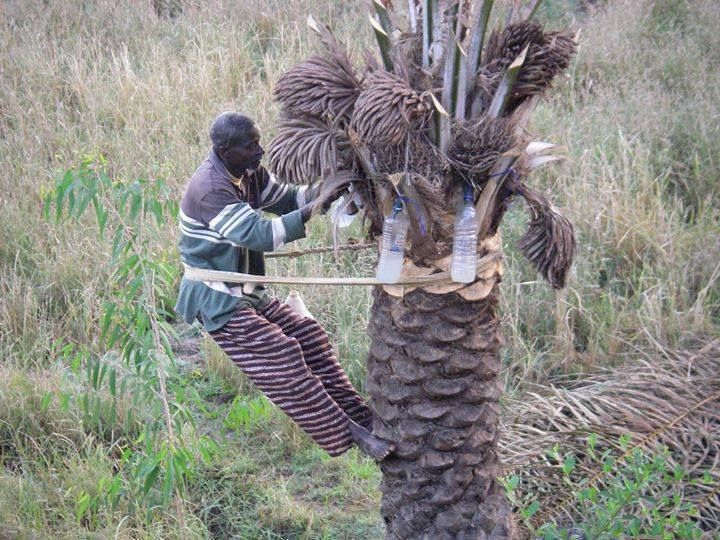
Palm wine is produced by tapping the sap of palm trees, particularly the oil palm and raffia palm. Once collected, the fresh sap begins to ferment naturally. It is initially sweet, but its taste gradually becomes sharper and its alcohol content increases as fermentation continues. This means that the drink people enjoy at a gathering can taste quite different depending on when it was collected and how long it has been allowed to ferment.
Across southwestern Nigeria, palm wine is widely known as ẹmu among the Yoruba, while ògùrò is associated with wine tapped from raffia palms. Its presence at traditional ceremonies extends beyond serving guests. It is used at weddings, naming ceremonies, funeral gatherings and festivals, while some traditional religious practices also involve pouring a portion of the drink as libation.
A study examining Yoruba socio-cultural practices describes palm wine as part of traditional entertainment and religious ceremonies. It also documents its place in gatherings where people relax, play traditional games and share drinks after their daily activities. The practice reflects how palm wine can bring together celebration, hospitality and everyday social interaction.
In southeastern Nigeria, particularly among the Igbo, palm wine has a well-established place in marriage ceremonies. One of the most recognisable examples is the wine-carrying ceremony, in which a bride searches for her intended husband among the guests and presents him with a drink. When he accepts it, the gesture publicly identifies the man she has chosen.
Palm wine also features in marriage negotiations, family visits, funerals, festivals and traditional gatherings. In some communities, it is poured at ancestral shrines as part of libation. Researcher Osmund A. C. Anigbo’s 1990 study, Palm Wine as Social Processes: The Igbo Experience, documents how the presentation and sharing of the drink communicate friendship, marital commitment, social relationships and respect for traditional customs.
The cultural importance of palm wine is also visible in parts of the Niger Delta. Among the Arogbo-Ijaw of Ondo State, for example, research documents the production of palm wine from raffia palms and its relationship with the area’s drinking culture. A 2024 study by A. O. Albert and F. Baitei examines how palm wine and its distilled form, ogogoro, became connected to marriage rites, burial ceremonies, festivals and social gatherings in Arogbo communities.
The distinction between the two drinks is important. Palm wine is the fermented sap collected from the tree, while ogogoro is a stronger spirit produced by distilling fermented palm wine. The production and sale of the spirit have also become economic activities in some riverine communities.
Further east, palm wine tapping remains part of the cultural and economic life of the Ika people in Delta State. A study deposited in the University of Benin repository examines the practice between 1999 and 2020, documenting its connections with traditional ceremonies, marriage rites, funerals and the livelihoods of people involved in tapping and selling the drink. University of Benin Repository
Beyond these examples, research into palm wine consumption among rural households in Enugu State has identified its use in entertaining visitors, cultural festivals and land-related transactions. This shows that its importance is not limited to major ceremonies. In some communities, it also forms part of everyday negotiations and relationships between families and neighbours.
Another important aspect of palm wine is the livelihood it provides. Behind the drink served at a wedding or gathering are the tappers who climb palm trees, collect the sap and supply it to local markets, bars and customers. Sellers and traders also depend on the business, making palm wine part of the informal economy in several palm-growing communities.
Its production requires knowledge of the different palm species, the appropriate tapping techniques and the process of collecting and handling the sap. This knowledge is often passed between generations, keeping traditional occupations alive while providing income for households.
However, palm wine’s cultural position has not remained untouched by changing lifestyles. Commercial alcoholic beverages, urbanisation, changing religious practices and shifting social preferences have influenced how traditional drinks are viewed and consumed. Some younger people may recognise palm wine mainly as a drink served at traditional weddings, without knowing the wider customs and livelihoods connected to its production.
Yet its continued appearance at important family and community occasions suggests that it still carries meanings that go beyond its taste or alcohol content. A bottle of soft drink or imported wine may be served alongside it, but in ceremonies where palm wine is traditionally required, the alternatives do not necessarily carry the same cultural message.
Perhaps this is why palm wine has remained relevant across generations. It is connected to how people welcome one another, celebrate marriages, remember loved ones, honour traditions and earn a living. Its significance lies not simply in the drink itself, but in the relationships and cultural practices that have grown around it.