
The story of the Kalabari people cannot be told without the rivers and creeks of the eastern Niger Delta. For generations, these waterways have shaped their settlements, fishing traditions, trading networks and relationships with neighbouring communities. But beyond their connection to the water, the Kalabari have built a distinctive history marked by powerful trading houses, traditional political institutions, elaborate masquerades and cultural practices that continue to define their identity in Rivers State.
The Kalabari are an Ijaw-speaking people of the eastern Niger Delta. Their communities are found mainly around the riverine areas of present-day Akuku-Toru, Asari-Toru and Degema local government areas. Buguma, Abonnema, Bakana and other settlements are associated with Kalabari history, although each community has its own local identity and history.
Their environment played a major role in shaping their traditional economy. Living among tidal creeks and mangrove swamps, many Kalabari communities depended on fishing, with surplus fish transported to inland markets. Agricultural produce and other goods were brought back in exchange. Historian E. J. Alagoa explains that trade between the Niger Delta and the hinterland existed before European overseas commerce became dominant. This is important because Kalabari economic history did not begin with the arrival of European merchants.
European trade nevertheless transformed the region. From the seventeenth century, the Niger Delta became involved in the Atlantic trade in enslaved people. During the nineteenth century, palm oil became an increasingly important export. These commercial changes influenced the growth of trading communities and the political institutions through which they organised their affairs.
Among the Kalabari, influential trading houses became important centres of wealth and authority. Their leaders managed commercial relationships, organised trade and maintained networks with other communities and European merchants. The development of these houses helped shape the political and social organisation of Kalabari society. Cambridge University Press
The origins of the Kalabari are preserved through oral traditions, and historians have not treated every account as a settled fact. One important tradition connects their ancestry to the central Niger Delta and traces the name Kalabari to Perebokekalakebari, remembered as an ancestor whose name was shortened to Kalabari. Accounts associated with this tradition describe a migration through different settlements before the people established themselves around Elem Kalabari, near the mouth of the New Calabar River.
Another part of the tradition describes the arrival of different groups at Elem Kalabari, where they gradually formed a wider community. These accounts are important because Kalabari identity developed through the coming together of groups with different ancestral histories, rather than necessarily from one single founding family. Historian E. J. Alagoa’s work on Ijo oral traditions provides an important basis for studying these migration accounts.
This distinction matters: the name Kalabari came to represent a wider cultural and political identity, while individual settlements and groups retained their own histories. It is therefore more accurate to discuss the Kalabari as a people with connected but varied community traditions than to present one migration story as the only version.
The development of Kalabari society was also closely connected to its traditional political organisation. One important institution was the wari, commonly described in historical studies as a family-based or trading-house organisation. A wari could bring together related families and dependants under a recognised leader, with responsibilities that extended beyond domestic affairs.
As trade expanded, some of these institutions developed into powerful commercial organisations known as canoe houses. They were not simply groups of merchants. They could organise trading expeditions, maintain large canoes, mobilise people for protection and exercise considerable influence over community affairs.
In his 1999 study, The African World View and the Structure and Strategy of Traditional Business Enterprises, Nigerian scholar Nimi Wariboko examines the wari as a major institution in Kalabari commercial and political life. He describes the canoe house as an organised trading and fighting corporation, illustrating how commerce and political authority became closely connected. siris-libraries.si.edu +1
Traditional leadership also developed around the Amanyanabo, the ruler or king of a community. However, the extent of the ruler’s authority varied according to the community and its political arrangements. In traditional fishing settlements, assemblies and representatives of different wari groups played important roles in decision-making. The political structure was therefore more complex than a system in which one ruler made every decision. University of Ibadan Repository
Marriage is another important part of Kalabari cultural identity. Traditional marriage involves the participation of families and, in certain forms, the wider community. A Rivers State environmental assessment documenting customs in Kalabari project communities describes two forms known as igwa and iya.
In the account, igwa involves a more private arrangement between the groom and the bride’s family, while iya involves a wider family and community ceremony. During iya, the groom’s family presents gifts, including drinks, wrappers and money, to the bride and her relatives. A traditional practice called bibife also involves preparing a substantial meal for the bride’s family, strengthening the relationship between the two families.
These customs illustrate that marriage is not viewed simply as the union of two individuals. It also establishes relationships between families and recognises the place of the wider community in the process. Practices may differ between Kalabari settlements and families, but the importance of family participation remains a notable feature of traditional marriage. | Federal Ministry of Environment | EAD
Perhaps one of the most distinctive expressions of Kalabari culture is the Ekine Society, also known as Sekiapu, meaning “the dancing people”.
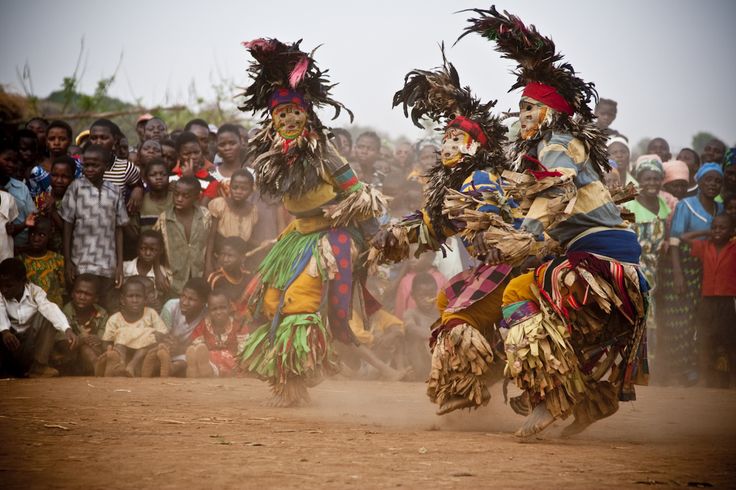
The society is particularly associated with masquerade performances representing water spirits, known as owu. These performances combine music, dance, carved masks and elaborate costumes. Some masquerades feature designs that bring together human and aquatic forms, reflecting the relationship between the Kalabari people and their riverine environment.
Anthropologist Robin Horton explored the society in his influential 1963 study, The Kalabari Ekine Society: A Borderland of Religion and Art. He explained that Ekine served several purposes: it was connected to religious beliefs, entertainment, social status and, historically, aspects of community government.
This makes the society much more than a group that performs traditional dances. It has been an important institution through which Kalabari people expressed their beliefs, maintained artistic traditions and established social identities. Cambridge University Press.
One of the cultural celebrations associated with Kalabari masquerade traditions is Owu-Aru-Sun Alali, a cycle of masquerade performances involving representations of water spirits. The performances bring together dance, drumming, costumes and traditional artistic expression. Research on Kalabari dance traditions describes these masquerades as important cultural performances through which the community maintains connections with its traditional beliefs.
The masks themselves are particularly significant. Collections at the Metropolitan Museum of Art include nineteenth-century works identified as creations of Eastern or Kalabari Ijaw artists. One example is a water-spirit crest used in Ekine masquerades, combining human and aquatic features. Such objects offer physical evidence of the artistic skill and cultural imagination behind these traditions. crab.uniport.
Music also plays a significant role in Kalabari social life, especially during funerals. A 2013 doctoral thesis by Isaac Osakpamwan Ibude, Music in Káláḇàrì Funeral Rites, examines how musical performances, dance and ritual activities contribute to the ceremonies surrounding death.
In these settings, music does more than accompany a gathering. It can express grief, honour the deceased, recognise family relationships and reflect traditional beliefs about life and death. The study also discusses the place of Ekine within the wider social and religious world of the Kalabari. University of Ibadan Repository
The Kalabari’s history is also a story of interaction with neighbouring communities. Their riverine location encouraged relationships through fishing, trade, marriage and movement between settlements. These connections helped shape the cultural history of the eastern Niger Delta, particularly in the relationships between Kalabari, Okrika, Andoni and other neighbouring Ijaw communities.
Today, Kalabari communities continue to experience changes brought by urbanisation, formal education, Christianity, modern commerce and changing lifestyles. These developments have influenced how younger generations relate to traditional institutions and occupations. Yet community histories, traditional leadership, marriage ceremonies, masquerade performances and funeral music remain important expressions of cultural identity.
Preserving this heritage requires more than celebrating it during festivals. It also means documenting the histories of individual settlements, recording the knowledge of elders, teaching younger generations the Kalabari language and supporting the artists, performers and cultural custodians who keep these traditions alive.
The Kalabari story is ultimately about a people whose identity was shaped by the waterways they inhabited, the trade networks they developed and the institutions they built. Their history shows that the creeks were not merely geographical features surrounding their settlements; they were routes of exchange, sources of livelihood and part of the cultural world through which the Kalabari came to define themselves.